

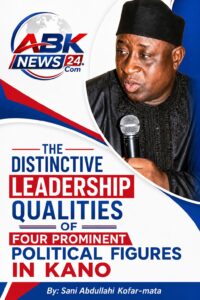
THE DISTINCTIVE LEADERSHIP QUALITIES OF FOUR PROMINENT POLITICAL FIGURES IN KANO
By: Sani Abdullahi Kofar-mata
Date: 8th July 2026
Introduction
Leadership is not defined only by political positions, electoral victories, or the ability to exercise authority; it is measured by the values, qualities, and impact that leaders demonstrate in their service to society. Throughout history, successful leaders have been distinguished by unique personal attributes that shape their leadership styles, influence public perception, and determine their relationship with the people.
In Kano’s political landscape, four prominent political figures have demonstrated distinctive qualities that have contributed to their individual leadership identities. While each leader has his own approach, personality, and philosophy, their unique strengths reflect important dimensions of effective leadership: the ability to listen, communicate, show courage, and demonstrate compassion.
Dr Abdullahi Umar Ganduje: The Quality of Listening Leadership
One of the defining qualities associated with Dr Abdullahi Umar Ganduje is the ability to listen and engage with different perspectives. Effective leadership begins with understanding the concerns, aspirations, and expectations of the people. A leader with listening ears creates opportunities for consultation, dialogue, and inclusive decision-making.
Listening is a fundamental leadership virtue because it allows leaders to gather information, appreciate diverse opinions, and make informed decisions. It strengthens trust between leaders and citizens and demonstrates respect for the views of others. Through this quality, leadership becomes more responsive and connected to the realities of the people.
Mallam Ibrahim Shekarau: The Strength of Effective Communication
Mallam Ibrahim Shekarau is recognised for his strong communication skills, which represent an important attribute in political and public leadership. Communication is the bridge between leaders and the society they serve. A leader must be able to explain ideas clearly, inspire confidence, and create understanding among different groups.
Effective communication enables leaders to share their vision, mobilise support, and build meaningful relationships with citizens. It also helps in promoting unity, reducing misunderstandings, and ensuring that policies and programmes are properly understood by the people.
Dr Rabiu Musa Kwankwaso: The Spirit of Courage and Determination
Dr Rabiu Musa Kwankwaso is often associated with courage, confidence, and determination. Leadership requires the ability to make difficult decisions, pursue convictions, and remain committed to objectives despite challenges and obstacles.
Courageous leadership inspires followers because it demonstrates resilience, confidence, and readiness to take responsibility. In politics and governance, where leaders frequently encounter complex situations, courage remains a critical quality for advancing ideas, initiating reforms, and pursuing long-term goals.
Engr Abba Kabir Yusuf: The Virtue of Compassionate Leadership
Engr Abba Kabir Yusuf represents the quality of compassion and concern for the welfare of the people. Compassionate leadership is built on empathy, understanding, and a genuine commitment to improving the lives of citizens.
A compassionate leader recognises the challenges faced by ordinary people and strives to create solutions that promote social well-being, development, and inclusiveness. This quality strengthens the bond between leadership and the people because citizens value leaders who demonstrate care, humility, and commitment to their aspirations.
Leadership Lessons from Their Unique Qualities
The experiences and leadership styles of these four political figures demonstrate that effective leadership is multidimensional. No single quality alone defines a great leader; rather, successful leadership requires a combination of virtues.
Listening creates understanding. Communication builds connection. Courage drives action. Compassion strengthens public trust. When these qualities are combined, they provide a strong foundation for responsible, people-centred, and transformative leadership.
The diversity of leadership qualities among political actors also highlights an important lesson: societies benefit when leaders use their individual strengths to contribute positively to development, unity, and progress.
Conclusion
Leadership is ultimately remembered not only by positions held but by the values demonstrated and the impact created. Dr Abdullahi Umar Ganduje’s listening ability, Mallam Ibrahim Shekarau’s communication skills, Dr Rabiu Musa Kwankwaso’s courage, and Engr Abba Kabir Yusuf’s compassion represent different dimensions of leadership that have shaped their public identities.
The future of effective governance depends on leaders who can listen to the people, communicate clearly, act with courage, and govern with compassion. These qualities remain timeless principles for building trust, promoting development, and achieving meaningful progress in society.